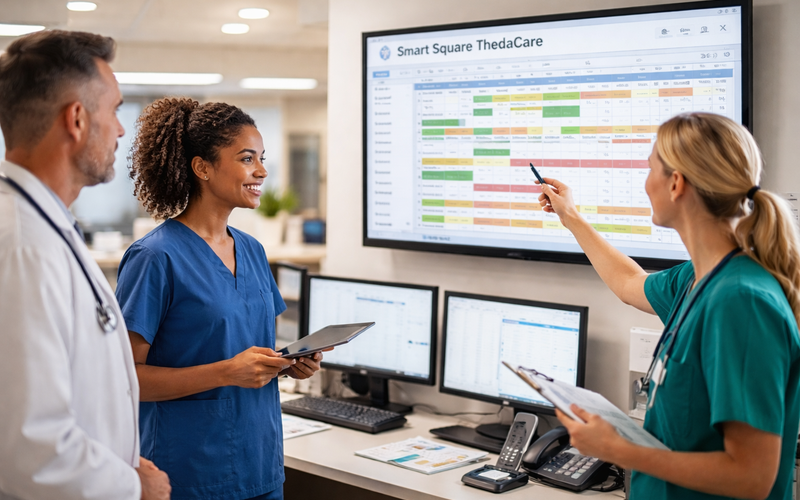
Smart Scheduling Made Easy
Smart Square ThedaCare is transforming how healthcare facilities manage staff schedules efficiently. Healthcare staff management is often complicated and time-consuming, and relying on manual schedules can cause conflicts and errors. Smart Square ThedaCare simplifies these tasks, allowing administrators to plan shifts with precision, reduce stress, and improve staff satisfaction. By using this technology, hospitals can ensure proper staffing levels while employees have clear visibility of their work hours. It also prevents burnout caused by poor planning and adapts to last-minute changes effortlessly, strengthening overall operational efficiency.
Smart square thedacare Automation Saves Time
Automated scheduling removes repetitive tasks from managers and saves hours each week in administrative work. Shifts can be assigned based on availability, skill sets, and departmental requirements, while conflicts are minimized through smart algorithms. Employees receive instant notifications about changes, ensuring clarity and reducing confusion. Automation also reduces human errors, leading to smoother operations and more reliable time tracking. Managers can focus on strategic planning and analyze data for continuous improvement, making the organization more efficient overall.
Smart square thedacare Flexible Staff Control
Employees can view schedules online anytime, request days off, or swap shifts easily, which fosters fairness and trust in the workplace. Staff feel empowered and engaged in their work, while flexibility reduces frustration and enhances morale. This system helps retain skilled workers, allowing them to balance personal life and work effectively. Absenteeism decreases, reliability improves, and team collaboration strengthens naturally over time. Overall satisfaction rises across the department, creating a more positive and productive work environment.
Smart square thedacare Better Patient Care
Proper staffing ensures patients receive attention promptly, and shortages or overwork no longer compromise quality. Nurses and doctors can focus on clinical tasks while predictive tools anticipate high-demand periods efficiently. Data-driven scheduling ensures that units are adequately covered, emergencies are handled seamlessly, and patient satisfaction improves as care becomes more consistent. Resources are allocated efficiently, allowing hospitals to operate smoothly and meet patient needs without unnecessary stress. This approach enhances both operational efficiency and the quality of care delivered.
Simple Shift Management
Managers can define shifts clearly and apply rules for qualifications, certifications, and experience automatically, preventing scheduling conflicts before approval. Employees can see all upcoming shifts in one centralized platform, making communication faster and more transparent. Shift management tools also reduce overtime and staff fatigue while ensuring compliance with labor regulations. Historical data guides future scheduling decisions, enabling staff to plan ahead confidently. Management gains control without micromanaging, creating a more organized and reliable system for everyone.
Smart quare thedacare Real-Time Updates
Real-time alerts notify staff of changes immediately, and vacancies or extra shifts become visible instantly. Emergency adjustments are handled without chaos, keeping everyone informed and aligned at all times. This reduces stress and prevents last-minute confusion while maintaining coverage across departments. Employees respond faster to operational needs, and notifications can be customized for critical updates. Transparency promotes accountability among staff and allows managers to spend less time chasing information.
Analytics for Insights
Scheduling data provides insights into trends, gaps, and patterns, such as overtime or coverage issues. Managers can optimize staffing levels for efficiency, making decisions that are informed and strategic rather than reactive. Reports help justify staffing budgets and guide resource allocation, highlighting areas needing attention before problems arise. Staff performance and availability are monitored effectively, while predictive modeling improves planning accuracy. Hospitals benefit financially and operationally, creating a smarter, data-driven workforce system.
Boosting Morale
Clear schedules and fair management reduce frustration, showing staff that their time is respected and valued. Engagement and motivation naturally increase when employees feel heard, and turnover rates decline as fairness becomes consistent. A positive workplace culture develops organically, enhancing team cohesion. Morale improvements also indirectly improve patient care, as happy staff are more attentive and efficient. Conflicts over schedules decrease, trust in management grows, and the work environment becomes more collaborative and supportive.
Compliance Made Easy
Labor laws, rest periods, and certification requirements are tracked automatically, preventing violations and reducing administrative burden. Administrators can avoid legal issues through automated checks, while staff focus on clinical duties without worry. Documentation is stored digitally and accessed easily, minimizing mistakes from manual tracking. Audit trails provide transparency for inspections and ensure compliance is integrated into daily workflows. Hospitals maintain high operational standards effortlessly, creating a safe and reliable environment for both staff and patients.
Preparing for the Future
Smart scheduling tools continue to evolve rapidly, integrating AI and machine learning to enhance predictive planning. Mobile access allows staff to manage shifts on the go, while integration with telehealth and clinical software improves overall workflow. Workforce planning becomes even more intelligent, responsive, and adaptable. Healthcare institutions adopting these systems gain a competitive edge, improving staff efficiency alongside patient care quality. Operational costs decrease, satisfaction rises, and technology becomes an enabler of excellence, helping organizations adapt to future challenges with confidence.Visit my site for more information.